Showing posts with label Spring. Show all posts

Thursday, March 22, 2012

Blue Mophead Hydrangeas under my Balcony

Hydrangea macrophylla

These will be blue in May!
From Methods of Healing:
The substances from the root of the hydrangea plant are a welcomed alternative to current treatments for immune-related medical conditions. There are many benefits to adopting this recipe in a treatment plan for these types of disorders.

Researchers have found that they can make a medication, halofuginone (derived from the roots of the plant) that serves to keep the body from producing harmful white blood cells that are commonly associated with immune system diseases. It can do this without interfering with health immune system functioning.

Narrow Leafed Plantain by the Garden

Plantago lanceolata, Plantagenaceae
From Health From Nature:
Ribwort Plantain makes an effective treatment for wound bleeding. It contains epidermal growth factor, stimulating the repair of damaged tissue. Leaves extract has antibacterial properties. Plantain can be used in an asortment of treatments: diarrhea, gastritis, hemorrhage, hemorrhoids, in cases of irritable bowel, against bronchitis, catarrh, sinusitis and asthma. Externally, decoction obtained from the leaves is used in cases of skin inflammations, cuts, stings and malignant ulcers. Plantain root is useful in cases of rattlesnake bite. Seeds, having a high mucilage content, are a good remedy against parasitic worms. Distilled water made from the plant makes an excellent eye lotion. Tea made from the seed is helpful in treatment of diarrhea, dysentery and bleedings of mucous membranes.

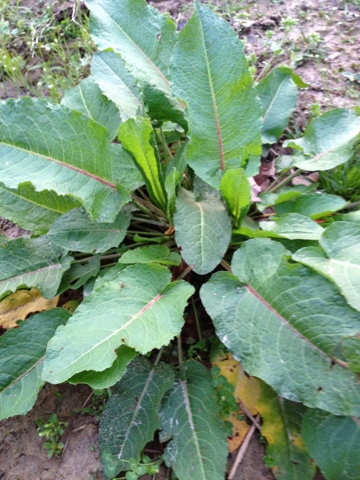
Yellowdock Beside the Garden

Rumex crispus, Plygonaceae

From My Best Remedies:

This widespread weed can be found throughout North America and Europe where it grows up to 3 feet tall. The leaves of the plant are edible and can be prepared like spinach. They are rich in vitamins A, B, and C, and calcium, iron, and potassium. They make a nice spring salad and come out most conveniently when our bodies need it most -- after a long winter of overindulgence.

The root should be collected in spring or autumn and has been used by numerous American natives to yield a yellow dye.


Read more

Remedies